DIY
· 2026-05-18From a Pile of Parts to a Talking Robot: WALL-E
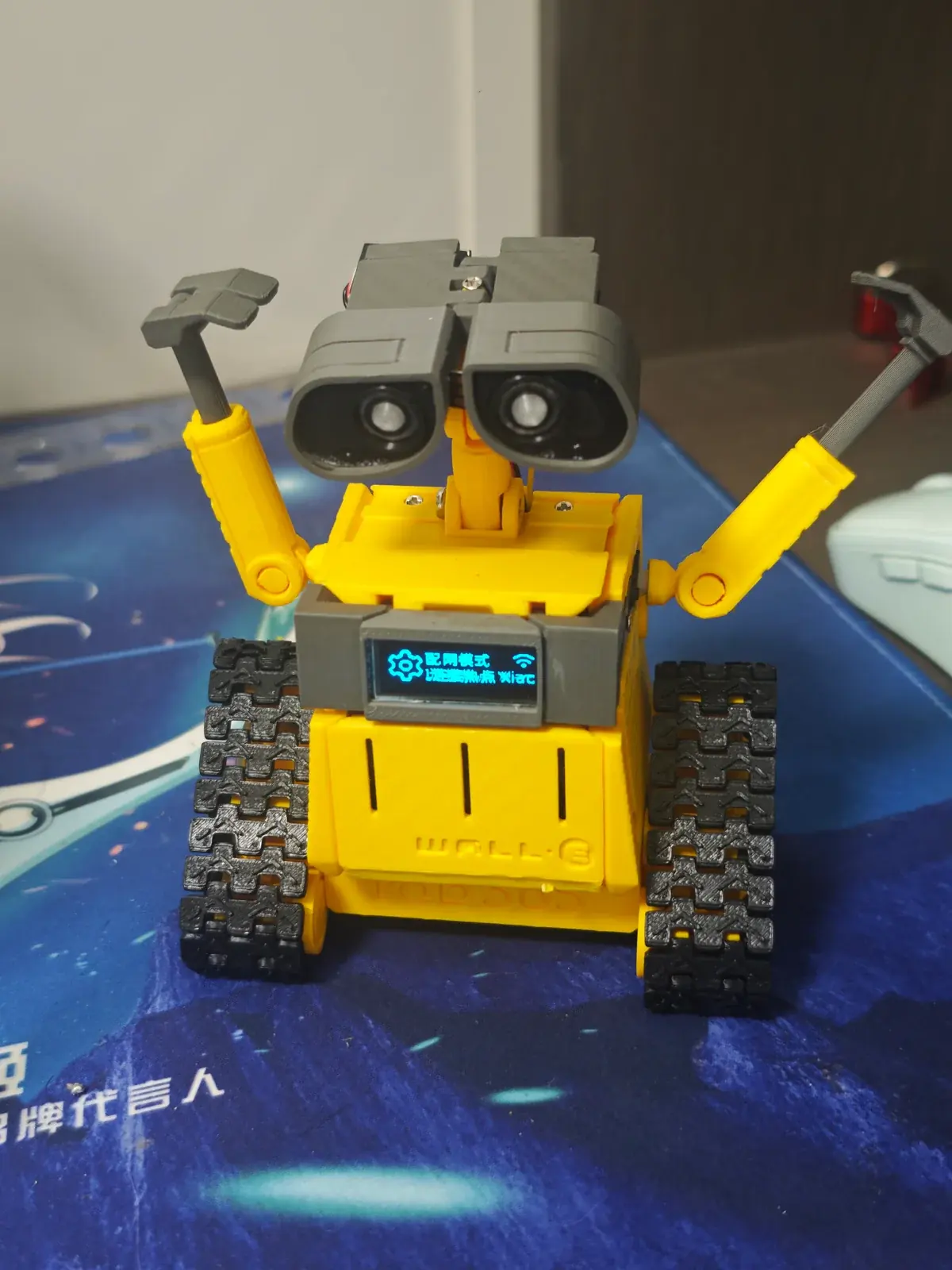
3D-printed shell, hand-soldered electronics, flashed ESP32-S3 AI firmware — I built a WALL-E robot out of parts.
DIY
· 2026-05-183D-printed shell, hand-soldered electronics, flashed ESP32-S3 AI firmware — I built a WALL-E robot out of parts.
In WALL-E, a little robot picks trash, grows a plant and quietly holds hands — for many, the image of "lonely but gentle".
So when I saw a WALL-E kit, I was tempted. Then I thought: buying a finished one is no fun. I'll build it myself. A full DIY journey — from material selection to power-on test — began.
First: the 3D-printed shell and a pile of electronics. Selecting materials looks simple, but takes judgment:
This step is like "set the chart of accounts before recording": get the ledger clear first.
The "hardcore" part — hand-soldering the circuits.
Screen, LED strip, wiring... joints must be solid, no cold joints; temperature controlled to avoid burning components. A bad joint costs more to redo than to do right the first time.
Here I learned: "looks like it runs" and "really runs" are different things. It looks pretty after soldering, but only power-on reveals the cold joints — like accounting: the books being balanced doesn't mean they're right; they must survive review.
Soldering gave it a body; flashing firmware gave it a soul.
Connect ESP32-S3, burn firmware and the AI dialogue program. This crossed from hardware to software — from pure frontend to code running in a chip that hears through a mic and speaks through a speaker.
The moment it flashed, the WALL-E stopped being plastic and solder joints — it became a talking AI robot.
After assembly, power on — the screen lights up, AI ready.
From a pile of parts to a desk robot that talks: the whole process felt like a small act of creation. The satisfaction when the screen lit up — no ready-made toy gives you that.
Many assume "accounting student" and "hardware" have nothing in common. But this build convinced me: hands-on ability has no boundary with your major.
Soldering needs patience and care; flashing needs logic and debugging; selecting materials needs judgment and trade-offs — the same underlying skills accounting trains: carefulness, rigor, process sense. In the AI era, knowing how to use tools well and making things with your hands are both valuable.

Why I built a personal site and shaped it around "Accounting × AI × Product".

Using scraper, Codex and DeepSeek to ship projects as an accounting student.

Exporting chat records, analyzing my speaking style, and training an AI that talks like me.
Chat with Guo Dong
AI avatar · based on my profile
Powered by DeepSeek · for reference